Penguin Tank

Categories
Plastic Water Storage Tank

This Monsoon, Learn To Collect Rainwater At Home -Part 2

Blog

This Monsoon, Learn To Collect Rainwater At Home -Part 2

This Monsoon, Learn To Collect Rainwater At Home -Part 2

We have discussed the five methods of collecting rainwater at home in the previous month’s blog here This Monsoon,Learn To Collect Rainwater At Home.  This blog will focus on the remaining methods in detail.

Natural Recharge Of Wells And Bore Wells

A recharge pit is one meter in diameter and six meters deep that is linked with concrete rings having perforations. These perforations let filtered and de-silted water seep from the sides increasing the groundwater table. Rooftop rainwater is led through pipes with a filter at the end of the open dug wells.

Rain Reservoir

Rainwater that simply falls on the rooftop is made through run a pipe to a storage facility like a sump or a tank. Later on, this water can be filtered to purify. This water can be used for washing and gardening purposes easily. This method helps in saving energy and a win-win situation for the environment and the economy.

Rainwater Tarp

The rainwater tarp is one of the simplest methods to collect rainwater. A tarp, PVC pipe, and a container or a barrel are required. Check the elevation to make this method work. The elevation shift can take the shape of a slope or a small hill as it will determine the direction through which the water will flow.

Plastic-Lined Pond

A manmade pond can be created in the garden area that should be connected via the gutters and pipes to an elevated structure. First, a pond needs to be constructed that should be at least five feet deep. Then a plastic pond liner can be used over the hole to collect rainwater.

Other Unconventional Methods

There are other unconventional methods by creating or using some old objects at home to make rainwater saving easy and effective for future use. Some of the best examples include watering cans, large drums or pots, old plastic water tanks that are currently not in use, etc. Water stored here can be used for many miscellaneous purposes such as washing the outside of the house, ashing the car or garage, watering the plants, etc.

Therefore, do store rainwater in whichever way you find it convenient. Enjoy the monsoon and install the best quality plastic water tank for your home form Penguin Tank.

Leave a Reply

Categories
Plastic Water Storage Tank

What Are The Main Components of A Water Storage Tank?

Blog

What Are The Main Components of A Water Storage Tank?

What Are The Main Components of A Water Storage Tank?

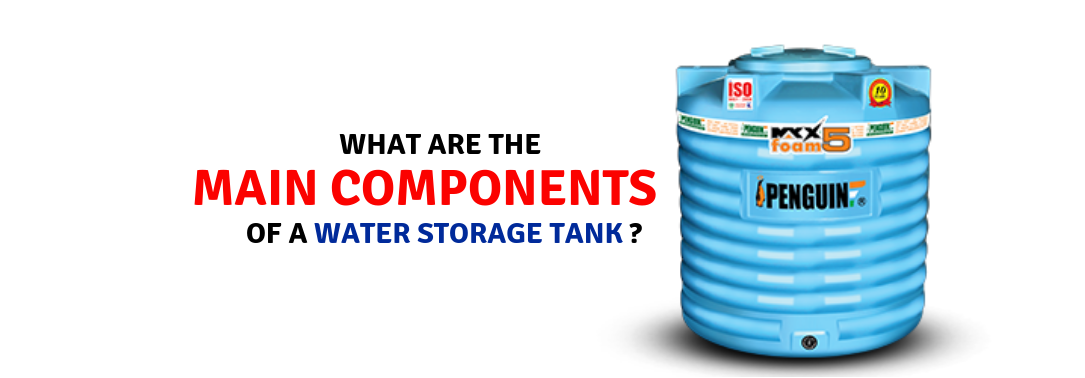
A water storage tank is widely used in all domestic and commercial property all over the world. Its importance is not unknown to us. A good quality water storage tank is needed to ensure the safety of the water that we are using for different purposes on an everyday basis. There are different types of water storage tanks. Follow the link below to know more. Water Storage Tank Comparisons For Drinking Water-Explained!

This blog will focus on the main components of a water storage tank irrespective of its type. The basic components of a water storage tank include the following:

Inlet and Outlet

The inlet and outlet allow the water to enter and exit the tank for daily uses. Therefore its placement should be done at the right location. The inlet should be at the topmost location to store the maximum water possible. The outlet should be at the bottom of the tank to use the maximum water. The water needs to be circulated well to maintain the residuals and impurities that settle at the bottom. The outlet should be ideally above four to six inches from the bottom.

Overflow Pipe

The overflow pipe is located at the inlet level at the top of the tank so that more water is not stored. It is required for freeboard to maintain the air gasp otherwise tank might burst due to excessive pressure.

Drain

It is located at the bottom of the tank to remove the residual deposits while cleaning the tank.

Vent

Vent pipes are located at the top of the tank to release air. Air is removed out through vent pipes at the time of refilling water in the tank. Opening of vent pipes should face downwards to prevent any unwanted object to enter the tank.

Level Indicator

A level indicator is dipstick or graduated rod that indicates the quantity of water stored inside the tank.

Sump

A sump is located at the base of the tank for draining purpose. The additional sump may be required for installation of submersible pumps in case of underground or on ground water tanks.

Manhole

Manhole is an opening into a tank top for cleaning, inspection, and maintenance. It is an opening in the top of the tank with a lid that can be locked.

These are the basic components of a water storage tank that needs to be checked at the time of installation properly.

Leave a Reply

Categories
Uses Of Water

How To Filter Rainwater For Drinking?

Blog

How To Filter Rainwater For Drinking?

How To Filter Rainwater For Drinking?

Rainwater harvesting started a long time ago for different purposes such as drinking, washing, feeding animals, watering plants, etc. Global warming is on a continuous rise leaving behind several adverse effects on our planet Earth. Water bodies are depleting, the population increasing, and pollution has been pulsating. Therefore it becomes our responsibilities to ave our planet in as many ways as we can. Through rainwater harvesting, we can provide a partial solution to the problems posed by water scarcity. But rainwater is not safe for drinking. Rainwater needs to be treated and filtered before using it for drinking purpose.Let us see how.

UV Treatment

This is one of the most effective and expensive methods to filter rainwater. The UV light works by penetrating an organism’s cell walls and disrupting the cell’s genetic makeup making it impossible to reproduce and rendering it harmless. It does not change the chemical composition of the water and leave behind no by-products. For Uv to be effective, the right dose of light must be used for a specific unit of water.

Chlorine and Iodine

Using chorine is a much more cost-effective method to filter rainwater. It has been used since long in many households to disinfect water. For rainwater filtration, use 203 fluid ounces of chlorine per 1000 gallons of water. The quantity of water, temperature and pH level also needs to be taken into consideration. Use an activated charcoal or carbon filter to remove the taste and smell of chlorine from water. Iodine is very similar to chlorine and can be used in the same manner and quantity.

Solar Pasteurization

This is one of the more labor-intensive purification processes, unlike all other methods. Fill a Ziploc bag with the rainwater, place the bad on two feet of aluminum foil, and the shiny part on a sunny place in your home. Let the bag stay heated under the sun for several hours and should remain at about 160 degrees Fahrenheit or higher. Therefore the waterborne bacteria are eliminated from the water.

Boiling the Water

This method is known to all of us. Simply boil rainwater for 10 to 15 minutes to kill the bacteria. In case of rainwater, pump the water into a geyser where it can boil and then be stored into plastic water storage tanks for later use. Make sure to let the water cool down before storing it.

Start saving rainwater and follow one or more of the above methods to purify and filter rainwater for all domestic and commercial purposes. Install a good quality plastic water storage tank from the house of Penguin Tank to store rainwater after filtering and disinfecting. Let’s save our planet.

Leave a Reply

Categories
Uses Of Water

This Monsoon, Learn To Collect Rainwater At Home

Blog

This Monsoon, Learn To Collect Rainwater At Home

This Monsoon, Learn To Collect Rainwater At Home

Water. So often it is taken for granted until the shortages hit us. This monsoon season, instead of just watching and enjoying the rains, lets us also collect those precious drops that falls down and gets wasted. Let’s make our own rainwater harvesting system at home by one or more of the following methods!

Rain Water Barrel

This is the most common water collecting method. This involves installing a wooden or plastic barrel at a gutter downspout to collect rainwater. A barrel can be easily made at home using an old drum, bucket or any other household item. Link it to a pipe fitted from the rooftop and make sure that the barrel has tight-fitting top to prevent it from the mosquitoes.


Rain Garden

A rain garden has a sunken landscape that uses native plants, local soils and mulch to remove pollutants from water and allow to percolate into the ground. The garden is usually submerged and can be easily created at home. It looks good all year round and leaves a positive impact on the surroundings. It has many amazing benefits such as minimizing pollution, conserving water, improving overall water quality, and reducing the number of mosquitoes during summer time.


DIY Rain Chains

This is the most creative method by making your own DIY rain chains at home that looks beautiful, fashionable and environment-friendly. It is generally made from copper or other metals. It works as the water collection device through cups that run the length of the chain.


Splash Block

Set up a splash block or pit stop to divert the flowing rainwater from rooftop pipes to structure’s foundation. It is a piece of concrete or plastic rectangular shaped block that is placed below the downspout that carries rainwater. It can enhance a garden around it and also prevent holes from being dug in the garden due to the eroding force of the pouring water.


Rain Saucer

It is the fastest DIY way to collect rainwater without much hassle. Rain saucer is a great form of rain collecting system which fills up very fast. It looks like an upside-down umbrella, it unfolds to form a funnel which fills the containers with rainwater. It catches rain straight from the sky and therefore there is a less chance of contamination.

Wait till next month to know the other great ways of rainwater collecting ideas. Enjoy the monsoon and install the best quality plastic water tank for your home form Penguin Tank.

To be continued…..

Leave a Reply

Categories
Plastic Water Storage Tank

What are the main functions of a Plastic Water Tank?

Blog

What are the main functions of a Plastic Water Tank?

What are the main functions of a Plastic Water Tank?

A plastic water storage tank is the most important type of water tank today in India. It is a container to store water for different domestic and commercial uses. There are many different types of water tanks such as an underground tank and above ground tank. It is also made up of different materials apart from plastic such as concrete, steel, and fiberglass. Before purchasing a plastic water tank, you should be aware of its different functions and uses.

Drinking And Cooking

The main use of water irrespective of the nature of the property is for drinking purposes. Drinking water quality is of utmost importance as it’s a matter of our health. Water storage tanks supply us with drinking water 24 x7 and ensure that we always have water available whenever we need. The next important use of water is in the kitchen for cooking. Cooking food is impossible without the use of water.

Washing and Cleaning

Another important function of stored water is for cleaning and washing purposes in households and industrial purposes. Washing clothes is a necessity. Cleaning utensils, home and outdoors, etc. are daily activities and impossible without water. Any cleaning activity requires clean water and therefore a plastic water storage tank comes really handy as you always have water stored inside.

Flushing the toilets

Flushing toilets is the absolute necessity to maintain hygiene and keep our toilets germ free. If the toilets are not flushed properly after every use then bacteria can penetrate and make you fall sick. You also need water for cleaning the bathroom, bathing, washing hands, etc. on a daily basis. In fact, water consumption in the bathroom and toilet is the maximum in most households.

Gardening

Another most important function of water is for gardening and irrigation. You need to water the lawn and garden of your private or commercial property on a daily basis. If you are growing your own fruits and vegetables then clean water from a clean water storage tank is required.

In times of emergency

Water is also needed to be stored in abundance in case of an emergency situation that may arise at any time of the day or night. For example, in case of a fire or water shortage due to a natural calamity such as cyclone or similar.

Therefore, a good quality plastic water storage tank such as Penguin Tank is very useful to meet all water demands in both domestic and commercial properties.

Leave a Reply

Categories
Health

Benefits of Drinking More Water In Monsoon Season?

Blog

Benefits of Drinking More Water In Monsoon Season?

Benefits of Drinking More Water In Monsoon Season?

During the monsoon, we feel less thirsty and therefore we end up drinking less eater. But the fact is skipping the water in monsoon season is harmful to our body. Staying hydrated in monsoon is equally important whether you feel thirsty or not. It keeps many diseases that end to thrive only in this season at bay. Here are some good reasons to drink more water this rainy season.

Fights Dehydration

Humidity increases in monsoon taking away huge amounts of water from the body. Therefore it is important to drink at least two to three liters of water every day to remain hydrated.

Keep Diseases At Bay

During monsoon season, we are more prone to falling sick and therefore drinking enough water helps us keep hydrated and kill the bad bacteria preventing many harmful monsoon diseases.

Boosts Immune System

Water consumption keeps the immunity level high in the monsoon that prevents in developing a monsoon disease. If the immunity is strong, your tummy is happy. It aids the digestion process and helps in indigestion or bloating and controls acidity.

Prevents Body Ache

Water helps to provide better blood circulation preventing joint and body pains. Lack of water is the main cause of body and joint aches especially in the monsoon season since we drink less water in this season.

Promotes Weight Loss

Water is one of the most important ingredients that promote weight loss. Drinking seven to eight glasses of water every day keeps your body energetic and therefore allow you to burn more fat while working out. It also flushes out the toxins from the body and helps in losing weight.

Boosts Energy

Water helps to boost energy. Include fruits and vegetables that are high in water content such as melons, cucumber, oranges, plums, pineapples, apricots, peaches, pears, etc in your daily diet to get energy from these water-rich foods as well.

Controls Blood Pressure

Keep yourself hydrated and keep your blood pressure levels normal. Water keeps the blood pressure balanced irrespective of the season.

Promotes Healthy and Glowing Skin

Our skin is more prone to acne, pimples and other infection in the monsoons. Humidity and dampness are high in this season that lowers the skin immunity as well. Water helps to fight infections and gives you glowing skin.

These health benefits work the best when you drink clean and fresh water from the best quality water tank. Therefore, always select plastic water storage tanks from the house of Penguin Tank. Enjoy Monsoons!

Leave a Reply

Categories
Plastic Water Storage Tank

Senior Hydration: Know Its Significance

Blog

Senior Hydration: Know Its Significance

Senior Hydration: Know Its Significance

Water holds a lot of significance in staying hydrated to people of all ages. In case of senior citizens, staying hydrated is all the more important as they can lose their appetite for water with aging. Not drinking enough water can lead to several dangerous health disorders such as kidney failure, organ failure, heart attacks, heart failure, seizures, headaches, coma or death. Let us throw some light on the role of water for our dads and other senior citizens at home.

Diminish Thirst

With aging, the sense of feeling thirsty starts to diminish and seniors end up drinking less water as they do not feel the thirst. Therefore, it becomes our responsibility to send them reminders about drinking water and keep a watch on their water intake on a daily basis.

Boost Brain Function

Drinking sufficient water is important for mental function as the body and brain are mainly comprised of water. A deficit of water in the body can cause seizures and headaches. A level of serious dehydration may cause the brain to swell and lead to permanent damage. A severe throbbing headache is also a sign of severe dehydration.

Boost Metabolism

Metabolism power slows down with aging and they also metabolize water differently than younger individuals. A strong metabolism is key to good health, especially in old age. Seniors often compromise on the water turnover and end up being dehydrated that affects their metabolism which is very dangerous.

Better Digestive Health

Constipation is a common problem in senior citizens. Apart from it, the other digestive disorders also affect the elders quite often that lead to discomfort and indigestion and constipation. A sufficient amount of water intake along with fiber consumption is equally important to improve digestive health.

Maintain Urinary Health

seniors often face urinary incontinence. Therefore, it becomes important to maintain healthy drinking habits to avoid serious complications such as urinary tract infections.

Manage Kidney Health

Kidney related issues are common in seniors that do not drink enough water. Due to the shortage of water in the system, the blood will not be properly filtered and can lead to confusion, lethargy, memory loss and sometimes kidney failure.

Therefore, take care of seniors and encourage them to drink enough water on a regular basis. This Father’s Day, gift your father best quality water storage tank from the house of Penguin Tank. Be rest assured of his health with our water storage tanks. Happy Father’s Day!

Leave a Reply

Categories
Plastic Water Storage Tank

Rotational Moulding Process Explained in 9 Steps

Blog

Rotational Moulding Process Explained in 9 Steps

Rotational Moulding Process Explained in 9 Steps

In today’s world, plastic water tanks are very popular and high selling product in the market for domestic and commercial uses. Since, plastic water storage tanks are easy to install, keep water fresh inside, restrain the UV rays, prevent the growth of algae, economical and recyclable when not in use. There are different manufacturing process of plastic water tanks, today we are going to discuss the most effective process of manufacturing plastic – Rotational Moulding Process

Rotational moulding is also referred to as rotomolding process. It is a process for manufacturing hollow plastic products. Most plastic water tanks are manufactured using this process.

1. First, to prepare the powder, the polyethylene material granules are mixed with the black colour concentrator. This formula is chopped as granules to get a uniform distribution of carbon black.

2. Now the powder is ready to insert in the mould following the right amount.

3. The rotational moulding machine is heated around 300-degree centigrade.

4. Now the mould is rotated in a certain speed (low speed) to form a uniform layer of plastic.

5. The heat is generated and the plastic starts to surrounded in the mould and gradually agglutinate the mould.

6. The mould forms a monolithic layer against the mould surface.

7. Until the plastic coagulates, the mould rotation continues until it has reached the cooling process.

8. When the plastic form in the solid form, the cooling, and mould rotation is stopped and the product is ready to be removed from the mould.

9. After being removed, each product undergoes a quality test. The product is ready to be sold in the market.

This process is also used in medical products, toys apart from plastic water storage tanks. Penguin tank manufacture tanks using the rotational moulding process as it is considered the best. We serve the best and high-quality plastic water tanks for both domestic and commercial uses. Buy our tanks to believe in our words. We manufacture the best quality plastic water tanks using this method to meet all domestic and commercial water requirements.

Leave a Reply

Categories
Plastic Water Storage Tank

Steel or Plastic Water Tank: Which One Is Better?

Blog

Steel or Plastic Water Tank: Which One Is Better?

Steel or Plastic Water Tank: Which One Is Better?

The plastic water tank is the most popular choice for both domestic and commercial uses nowadays. Before plastic water tanks, stainless steel tanks were an ideal choice.

Let’s see how are the two different from each other and which one is better to use?

1. Installation Process:

• All tanks need a strong grounding for installation. However, stainless steel tanks need more compact and solid grounding for its installation. After installing the steel tank, make sure you do not want to move it again. Because the steel tank can be very heavy and you may have to compromise with developing leaks and with the other structural functions.

• On the other hand, poly tanks are easy to install as it is much lighter in weight. It is easier to move your tank if required.

2. Longevity:

• Plastic water tank can last long (up to 20 years). The material of the poly tanks prevents the dangerous UV rays, as the UV- stabilizers added in the molding mix to enter the tank. The UV stabilized feature prevents the growth of algae and keeps the water safe for drinking and other purposes. It also prevents the plastic from fragile and decomposing.

• In the case of stainless steel, it requires more maintenance. Salty water or chlorine water can damage the steel easily. The UV stabilized layers remain missing here, unlike poly tanks.

3. Style:

• When it comes to style, the stainless steel tanks do not offer many color options. It looks more traditional and does not really add to the aesthetics.

• Whereas plastic water storage tanks are available in a variety of colors with greater versatility. These tanks enhance the aesthetic appeal of the exterior or interior of the property too. In short, plastic water tanks are more attractive.

As we are seeing, there is a huge difference between the plastic water tank and the stainless steel water tank. It is quite obvious that a poly water tank is highly recommended over steel tanks because it is simply trending at present. We, Penguin Tank, manufacture only the best quality plastic water tank for both domestic and commercial uses. We make sure that our best quality plastic water tanks meet all domestic and commercial water requirements.

Leave a Reply

Categories
Plastic Water Storage Tank

Learn To Store Water For Long-Term Emergencies

Blog

Learn To Store Water For Long-Term Emergencies

Learn To Store Water For Long-Term Emergencies

Our country’s eastern coast just got hit by the extremely severe cyclonic storm named ‘FANI’. It was the strongest tropical cyclone to strike the Indian state of Odisha after 2013. Some parts of West Bengal also got affected by this gigantic cyclone. However, Odisha suffered major damage and the state is still recovering from the after-effects of FANI. Several residential and commercial buildings were damaged followed by power cuts and limited or no water supply. Did you have enough water at home to last until the water came back? In times of long term emergencies, the only thing more important than food is water. This blog will focus on how to perfectly store water for long term emergencies and save your family from water shortage problems.

  • First, you need to decide how much water needs to be stored depending upon the number of family members. On an average, more than five litres of water is required for one person on a daily basis. Based on these, try to store at least two weeks of water supply for your family.

  • Select food grade containers to store water such as plastic food or beverage containers that are BPA free and manufactured using high-quality Low Linear Density Polyethylene (LLDPE) material. Penguin plastic water storage tanks are manufactured using these materials in West Bengal. Make sure not to reuse the containers that held beverages before as their residue encourages bacterial growth.


  • Clean the containers thoroughly with soap and warm water before filling them. Make sure to disinfect the water by either boiling or filtering it before storing. Try not to touch the inside of the container with hands to avoid contamination. Label the container with the purpose of its use such as drinking water and the date of bottling it. Store in a cool dark place away from direct sunlight.


  • Keep a regular check on the water every time you use to understand if you have enough water left or not. You can repeat the process if the water supply is still available to avoid any further water shortage issues.

It is important to stay safe at the time of natural calamities. During these times, there remains a high chance of water contamination. Therefore, avoid using water from an unknown source to protect yourself from water-borne diseases. Stay safe and assure to have a water storage plan in place to provide safe water to your family in times of need. You will be glad you did!

Leave a Reply